


What Affects Laser Cutting Quality? Holes, Corners and Thin Sheets
A laser cutting machine can produce clean, straight edges while leaving holes out of round, corners overburned, or thin parts distorted. These defects can add deburring and rework, prevent parts from fitting together, and delay delivery.
Consistent quality depends on matching the material, cutting settings, and equipment control to the actual part. This article explains common quality problems, practical improvement directions, and the machine features worth evaluating for thin- and medium-thickness sheet metal.

What Affects Laser Cutting Quality?
Four groups of variables help explain why the same laser cutting machine can produce different results across parts.
l Material Condition and Part Geometry
Material grade influences laser absorption and thermal behavior, while thickness affects the energy required to cut through the sheet. Surface contamination, coatings, and poor flatness can also change cutting conditions. Small holes, narrow gaps, sharp corners, and slender sections place additional demands on heat control and accurate movement. A setting that works on a large outline may need adjustment for these features.
l Laser Power, Cutting Speed and Focus
On a laser cutting machine, power and speed work together: insufficient energy for the travel speed can leave incomplete cuts, while excessive local heating can damage details. Focus position determines where the beam is most concentrated through the sheet, affecting cut width and edge quality. Suitable settings depend on material, thickness, and gas.
l Assist Gas, Nozzles and Optics
Assist gas helps remove molten metal from the cut. Gas choice also affects oxidation: oxygen adds heat through reaction, while nitrogen is commonly used where an oxide-free edge is required. Stable delivery, a sound and correctly centered nozzle, and clean optics help maintain cutting conditions. TWI identifies optical configuration and effective gas delivery as contributors to edge quality.
l Motion Control, Cutting Sequence and Sheet Support
The laser cutting machine must change direction around holes and corners, often reducing speed. Laser output needs to suit that changing motion. Closely spaced cuts can concentrate heat in one area, while inadequate support can allow released parts to move. Cutting order and support therefore affect the condition of the finished part.
Why Do Holes, Corners and Thin Sheets Develop Cutting Defects?
The location and shape of a defect help identify which settings or conditions need investigation.
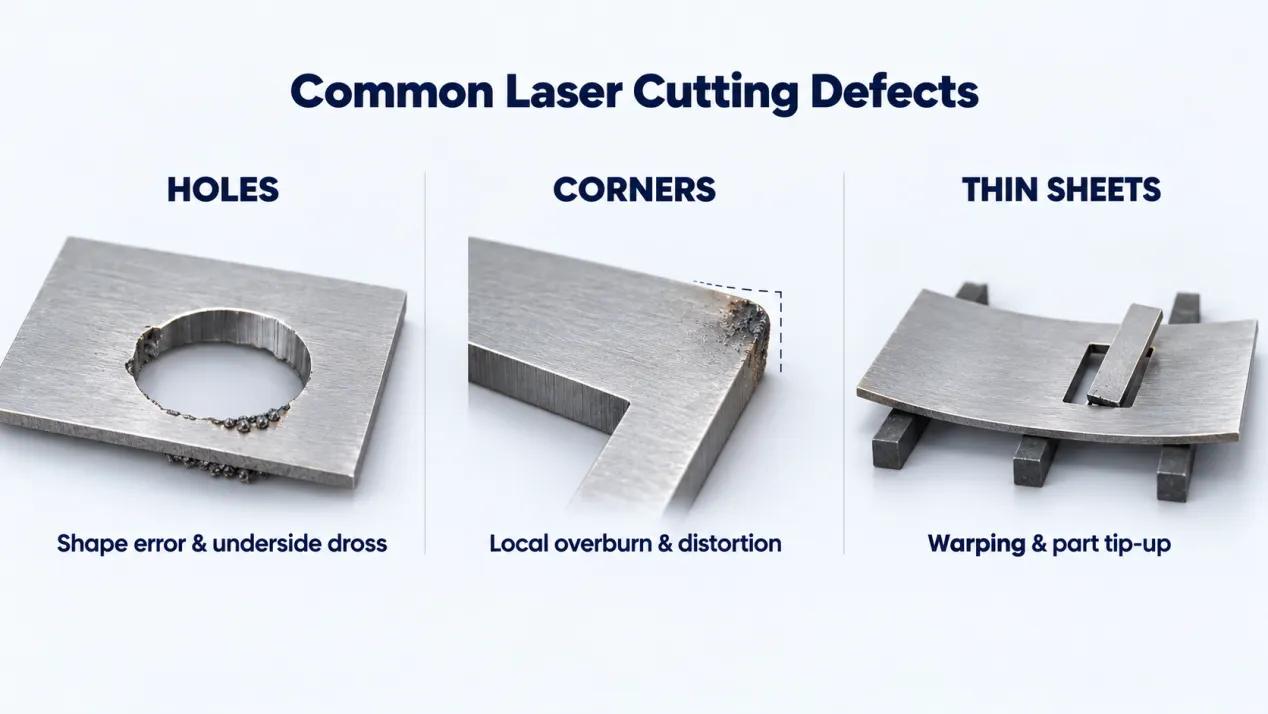
1. Holes: Irregular Shapes, Size Errors and Dross
Holes may be oval, incorrectly sized, or marked near the point where cutting begins. Dross—resolidified metal attached to the lower edge—can also obstruct assembly.
Possible causes include demanding hole dimensions relative to thickness, unsuitable piercing and lead-in settings, or mismatched focus and motion parameters. Improvement starts with the hole-cutting strategy and compensation for the width of material removed. Trials should reproduce the actual hole sizes and spacing.
2. Corners: Overburning and Contour Distortion
A corner may become rounded, excessively melted, or wider than the adjoining cut. When the head slows, unchanged laser output can concentrate too much heat locally.
Coordinating corner speed and laser output can reduce this risk. Contour settings and the paths entering and leaving the cut also deserve attention, particularly where marks repeat at the same location.[3] Springer Nature Link
3. Thin Sheets: Warping, Dross and Unstable Part Position
Thin parts may bow, collect underside dross, or tip upward as their contours are completed. Heat accumulation, ineffective molten-metal removal, and insufficient support or retention are possible causes.
Improvement may involve spreading cuts across the sheet, adjusting nesting spacing, matching gas delivery to speed, or revising support and micro-joint placement. Changes should be evaluated through controlled trials, with interacting settings such as gas delivery and cutting speed assessed together.
What Matters in a Laser Cutting Machine Besides Power?
The defects above point to specific capabilities to assess when choosing a laser cutting machine. Motion control, process settings, and sheet support should be evaluated against the quality required on actual parts.
l Coordinated Motion and Laser Output
Small holes involve continuous changes in direction, while sharp corners often require the cutting head to slow down. Stable motion helps preserve their shape, while laser output control during deceleration helps limit local overheating. These capabilities matter particularly for intricate contours.
l Adjustable Cutting and Piercing Settings
Piercing, lead-in, focus, and gas settings need to suit the material and part geometry. Accessible controls allow these conditions to be adjusted when hole-entry marks, dross, or incomplete cuts occur. Controlled laser shut-off helps keep cut endings clean.
l Sheet Support and Part Retention
Suitable supports and adjustable micro-joints help keep small or thin parts stable during cutting and manageable during removal. Cutting sequences and nesting layouts should also allow heat to be distributed across the sheet, reducing concentration around closely spaced features.
l Verification on Representative Parts
A laser cutting machine trial should reproduce the hole patterns, corners, and thin outlines used in production. Checking dimensions, edges, and flatness after cooling and removal, followed by repeated cutting, shows whether the proposed setup can meet batch quality requirements.
How HyLaser PRO Supports Consistent Sheet Metal Cutting
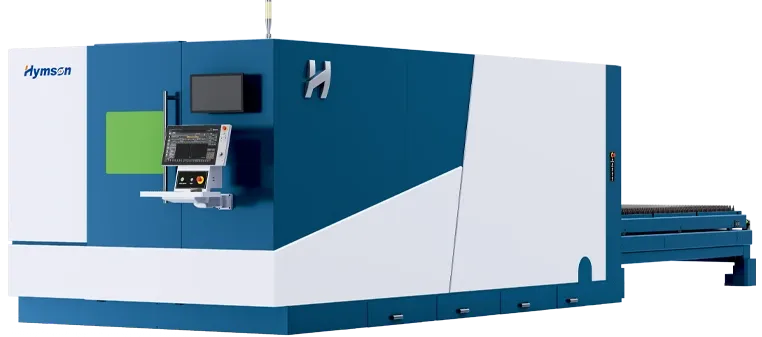
Hymson Laser Machinery’s HyLaser PRO is a flatbed laser cutting machine designed for continuous sheet metal production. Its capabilities cover the mechanical foundation, control of individual cutting stages, and part separation after cutting.
Stable Laser Output and Machine Structure
HyLaser PRO combines stable laser output with a precision interlocking bed. The bed supports high-speed, high-load operation and helps reduce the influence of vibration and structural deformation on processing accuracy. Together, these features provide a stable foundation for complex contours and fine geometries during continuous production.
Piercing and Cut-Edge Control
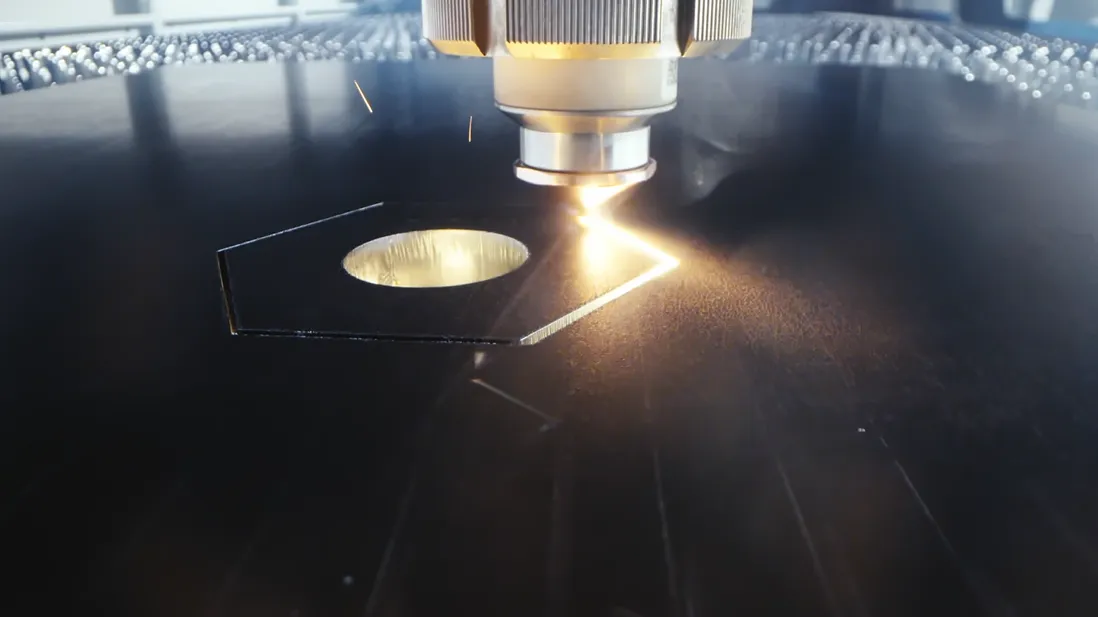
Piercing residue and cut-end finish can create additional cleanup work. HyLaser PRO provides functions for controlling the transition into cutting and the completion of each contour:
- Smart Piercing: Automatically transitions from piercing to cutting, reducing delay between the two stages.
- Deslag Piercing: Removes piercing residue automatically, helping reduce cleaning and secondary processing around the pierce point.
- Smart Laser Off: Precisely controls laser shut-off timing for cleaner edges at the end of a cut.
Incomplete-Cut Handling and Part Separation
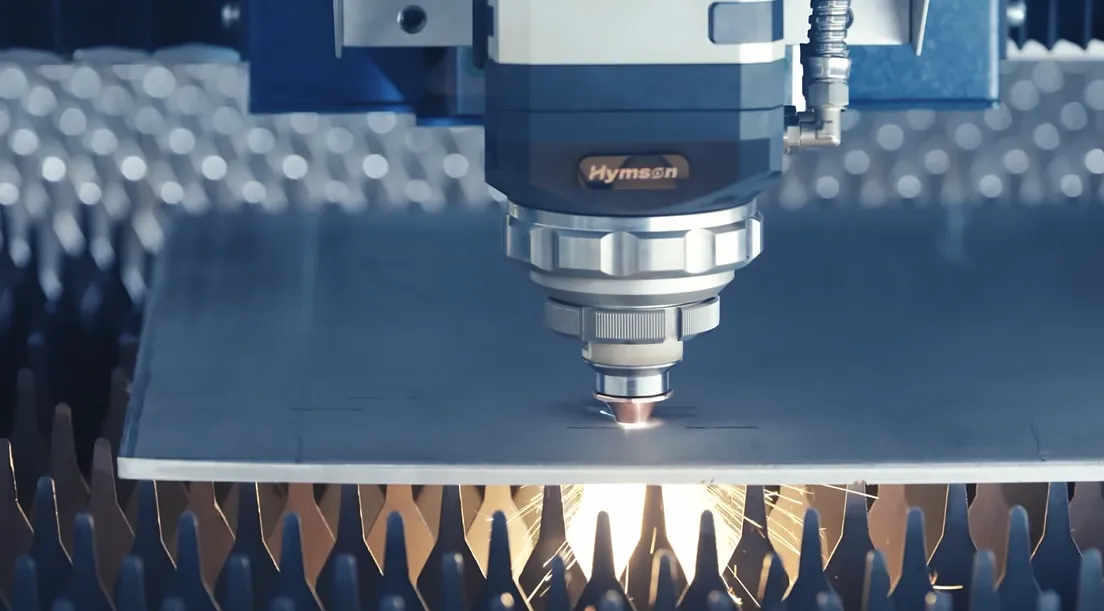
Part removal involves both completing the cut contour and releasing any micro-joints used to retain the part. HyLaser PRO addresses these tasks through two functions:
- Auto Recut: Detects incomplete cuts and automatically recuts them, helping improve yield and process reliability.
- Smooth MicroJoint: Uses ultra-small micro-joints that allow fast part separation with minimal visible marks at connection points.
Model and Configuration Choices
The series offers three working areas for different sheet and part dimensions.
|
Model |
Maximum working area |
|
HyLaser 3216 PRO |
3200 × 1600 mm |
|
HyLaser 4221 PRO |
4200 × 2100 mm |
|
HyLaser 6326 PRO |
6300 × 2600 mm |
Sheet and part sizes guide the working area; material thickness, required cut quality, and daily output guide power selection.
Conclusion
The value of a laser cutting machine extends to assembly, finishing, and delivery. Parts that meet dimensional, edge, and flatness requirements help reduce corrective work and make production schedules more predictable. Measuring acceptable parts per shift alongside finishing effort connects cutting performance with the factory’s actual delivery capacity.
Hymson Laser Machinery’s HyLaser PRO is worth evaluating for factories seeking stable sheet cutting and easier part separation. Its cutting platform and functions for piercing, incomplete-cut handling, and micro-joints provide specific capabilities to compare on representative parts.
Discuss your cutting requirements with Hymson’s team, using your materials, thicknesses, and representative drawings to guide the configuration review.
FAQs
1. Which Flatbed Laser Cutters Should a Thin- and Medium-Sheet Fabricator Compare?
Beyond power, compare a laser cutting machine’s motion stability, piercing control, and part handling. Hymson Laser Machinery’s HyLaser PRO range includes HyLaser 3216 PRO, 4221 PRO, and 6326 PRO. They combine stable laser output and an interlocking bed with Deslag Piercing and Smooth MicroJoint to support consistent cutting, less cleanup, and easier part removal.
2. What Quality Risks Are Common in Thin- and Medium-Thickness Sheet Metal?
Common risks include hole errors, overburned corners, warping, dross, and incomplete cuts. Excessive local heat can distort thin parts and overburn corners, while ineffective removal of molten metal can leave dross. For piercing residue and incomplete cuts, Hymson Laser Machinery’s HyLaser PRO provides Deslag Piercing and Auto Recut, reducing related cleanup and part-separation work.
3. What Power Range Makes Sense for Thin- and Medium-Thickness Sheet Metal?
A laser cutting machine’s power should match the material, exact thickness, and required output. Within the HyLaser PRO series, Hymson Laser Machinery lists 6, 12, and 20 kW configurations. Comparing these configurations on representative parts helps identify the power needed for the required cutting quality and production rate.
4. Can Automatic Recutting Correct Every Cutting Quality Problem?
No. Auto Recut on Hymson Laser Machinery’s HyLaser PRO addresses incomplete cuts. It cannot restore material lost through overburning or straighten a warped part. Repeated incomplete cuts at the same locations are a reason to review the process settings.
References
- TWI. Laser Cutting.
https://www.twi-global.com/what-we-do/research-and-technology/technologies/welding-joining-and-cutting/lasers/laser-cutting
- TWI. Laser Cutting – Cutting Processes.
https://www.twi-global.com/technical-knowledge/job-knowledge/cutting-processes-laser-cutting-052
- Olmez, H. N., et al. Laser cutting of simple and complex geometries in structural steel: toward fabrication of metastructures. The International Journal of Advanced Manufacturing Technology, 2026.
https://link.springer.com/article/10.1007/s00170-026-18372-3
- Wang, Y., Liao, X., Lu, J., and Ma, J. Optimization Method of Sheet Metal Laser Cutting Process Parameters under Heat Influence. Machines, 2024, 12(3), 206.
https://doi.org/10.3390/machines12030206
- Busatto, M., et al. Compensating thermal expansion via tool path correction during fusion laser cutting of Al5754. The International Journal of Advanced Manufacturing Technology, 2025.
https://link.springer.com/article/10.1007/s00170-025-16787-y